This Was Where Our Voices Mattered Most: A Community Came Together for San Francisco’s People’s Budget
San Francisco stood at a crossroads as budget decisions approached, and community members recognized that the moment to act was now. With critical services for seniors, people with disabilities, and low-income residents on the line, advocates, organizers, and residents came together to demand restoration—not reductions. The Mayor’s final budget had not yet been set, and there was still time to push for funding that keeps communities healthy, connected, and housed.
That understanding shaped a powerful day of collective action. Community members gathered first for a rally at the Mayor’s Office and then carried that energy directly into the Budget Committee hearing, where decisions were actively being debated. It was a day that demonstrated how public participation, shared stories, and visible solidarity could influence the direction of city policy.
Why the Moment Mattered
San Francisco faced a significant budget deficit, and proposed cuts threatened programs that many residents relied on every day. These were not abstract budget lines. They were services that delivered meals to homebound seniors, provided care coordination for people with disabilities, reduced social isolation, and helped residents remain safely housed and independent.
Participants reframed the budget conversation through the lens of the People’s Budget, emphasizing that budgets are moral documents. They reflect a city’s priorities and values. The call to action centered on a clear message: investing in prevention and community-based care was both humane and fiscally responsible. Cutting these services would ultimately lead to higher costs through emergency care, homelessness, and institutionalization.
Gathering at City Hall
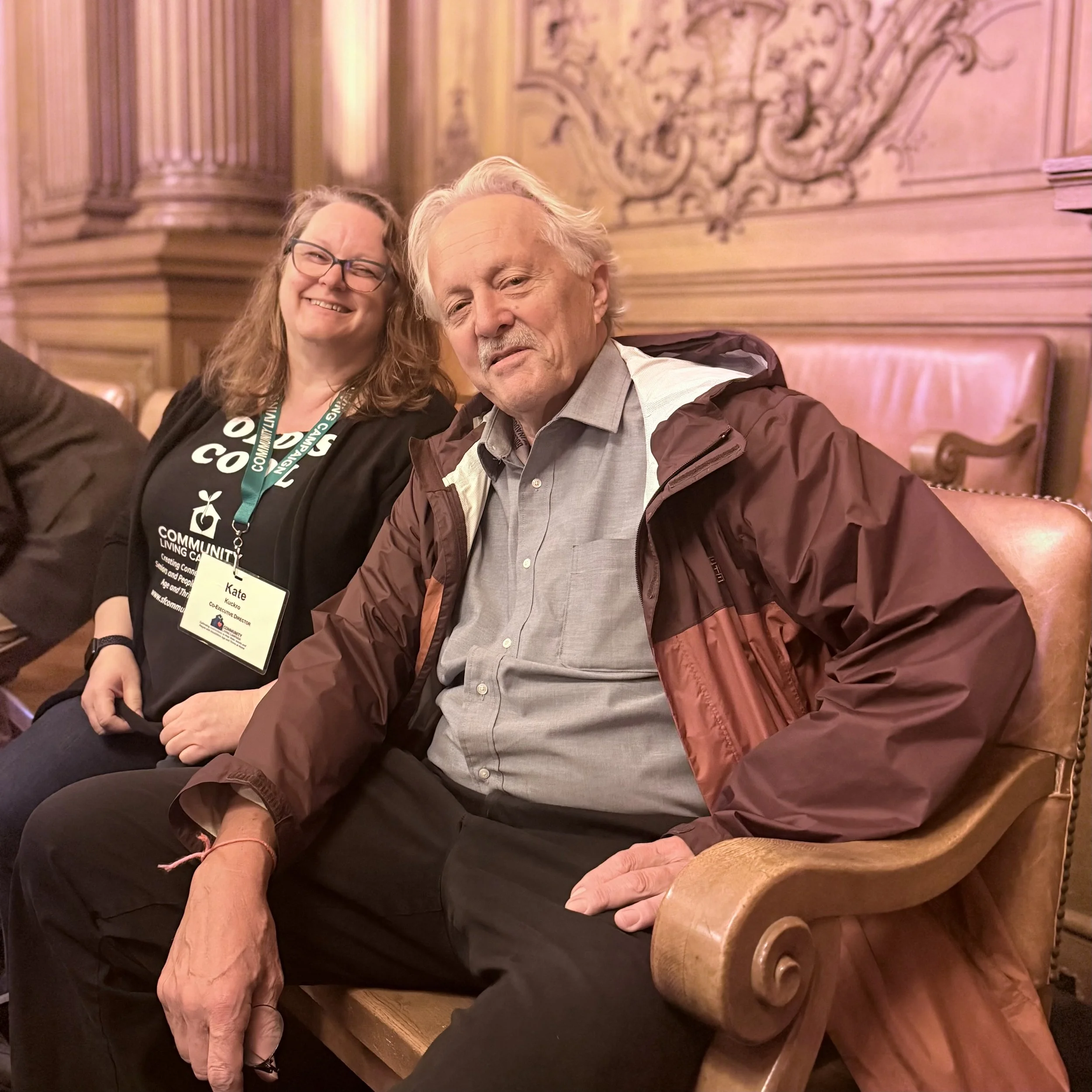
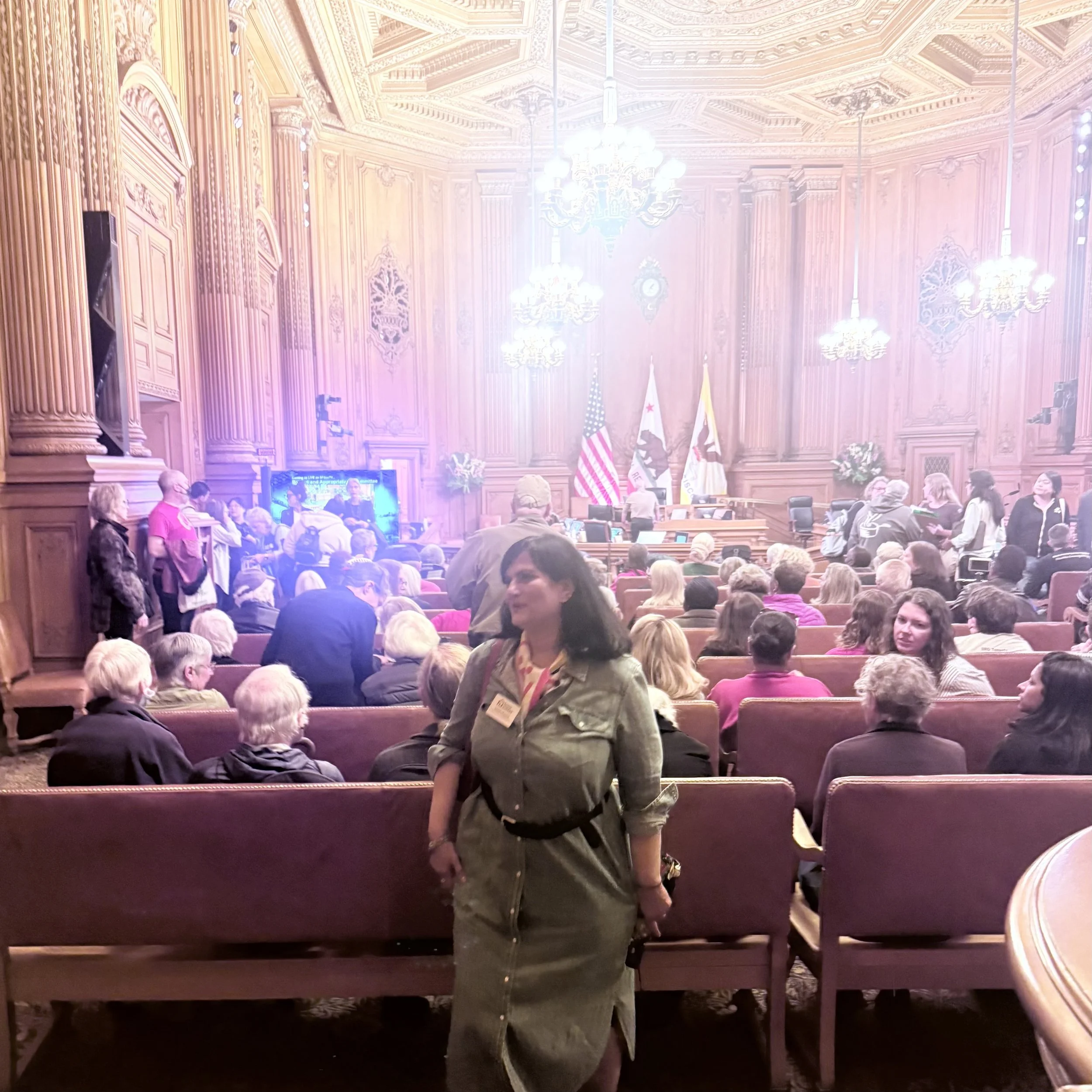
The day began at San Francisco City Hall, where community members convened in Room 278 starting at noon. The room had opened earlier to allow time for people to arrive, connect, and prepare. The atmosphere was one of shared purpose. Seniors, people with disabilities, caregivers, service providers, and advocates gathered side by side, many meeting for the first time but united by a common goal.
This initial gathering was about building collective presence. Organizers supported participants in preparing public comments, answering questions, and reminding everyone that expertise was not required—lived experience was enough. The emphasis was simple and powerful: this was where voices mattered most.
Delivering a Message to the Mayor’s Office
At 12:30 PM, the group proceeded together to the Mayor’s Office of San Francisco, Room 200. Moving as a group was intentional. Visibility mattered. Strength in numbers mattered.
Community members delivered postcards and crocheted impatiens flowers symbols of resilience, care, and persistence. These offerings represented the people behind the numbers in the budget and served as a reminder that real lives were affected by fiscal decisions. The action was joined by other San Francisco organizations, reinforcing that this was not a single-issue concern but a citywide call for equity and accountability.
The delivery was peaceful, creative, and grounded in dignity. It communicated urgency without hostility and underscored that community members were paying close attention to the choices being made at City Hall.
Bringing Energy Into the Budget Committee Hearing
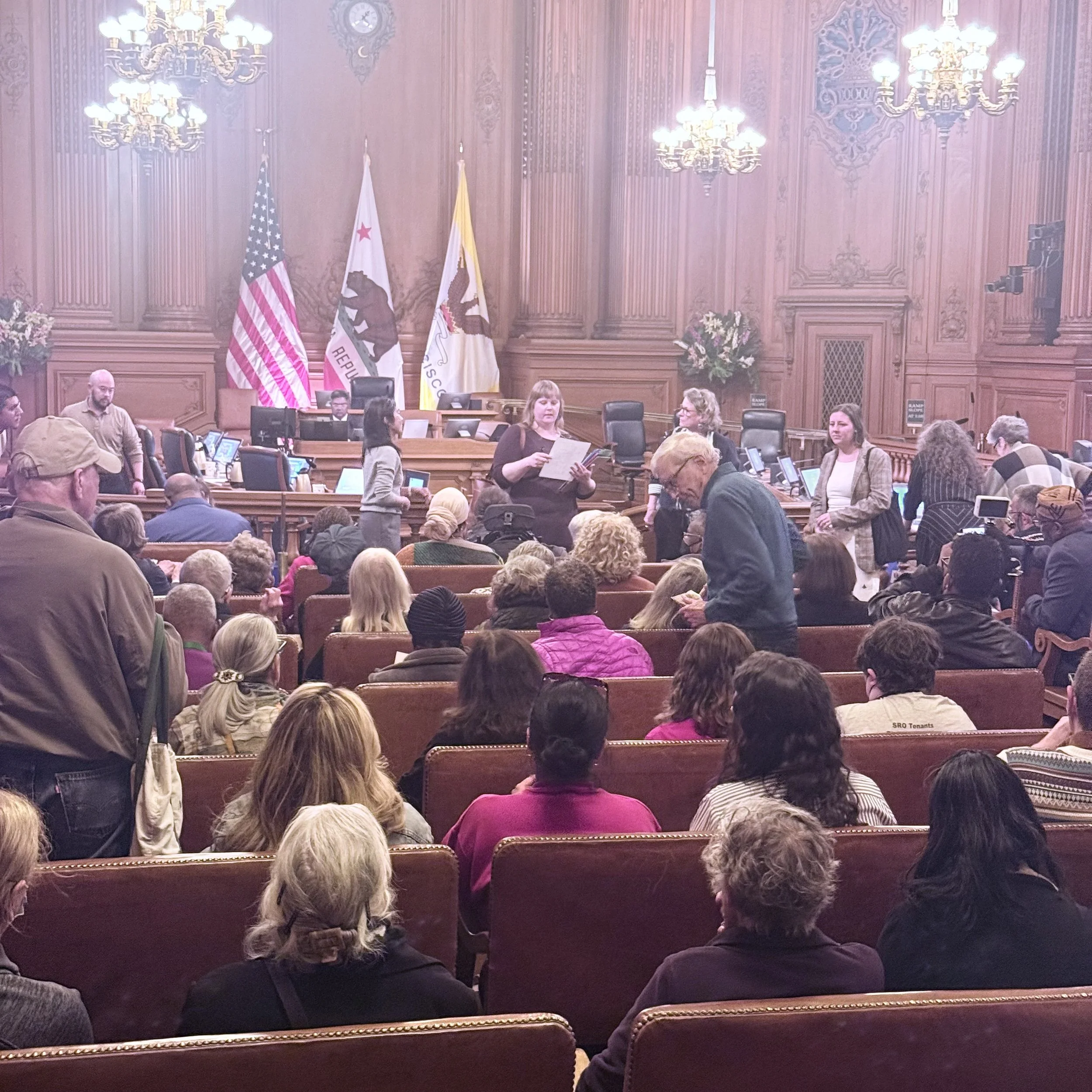
At 1:30 PM, participants moved to Room 250 for the Budget Committee hearing. This was the space where policy met people, and where testimony could shape outcomes. Community members filled the room, some there to offer public comment, others to stand in visible support.
Speakers were given up to two minutes each, and many used that time to share deeply personal stories. They spoke about how community-based services had helped them stay housed, manage chronic illness, remain socially connected, or care for loved ones. Others described what would be lost if funding were cut not just programs, but stability, dignity, and independence.
The testimony shifted the tone of the hearing. Budget discussions that often-remained abstract were grounded in lived reality. Decision-makers heard directly from the people most affected, and the cumulative impact of those stories was undeniable.
The Power of Lived Experience
Throughout the day, one message remained consistent: lived experience carried weight. Participants did not need policy jargon or financial expertise. Their stories made clear that these services were not optional or expendable. They were essential.
Speakers highlighted how prevention-based services saved money over time by reducing emergency room visits, hospitalizations, and long-term institutional care. They emphasized that cuts to community programs did not eliminate need they simply shifted costs to more expensive and less humane systems.
By centering human impact, the People’s Budget approach reframed the narrative. It challenged the idea that austerity was inevitable and instead asserted that choices were being made and could be made differently.
Showing Up Together Made a Difference
The success of the day rested not on any single speech or action, but on collective presence. Rooms filled with community members told a story of shared values and sustained engagement. It became harder to dismiss concerns as isolated or marginal when so many voices echoed the same call for restoration.
Public participation worked because it was organized, visible, and persistent. The rally, the delivery to the Mayor’s Office, and the coordinated presence at the hearing demonstrated that San Franciscans were watching, engaged, and unwilling to quietly accept cuts that harmed the most vulnerable.
Community, Care, and Accountability
The action also reinforced a broader truth about San Francisco: its strength has always come from people who show up for one another. Seniors, people with disabilities, caregivers, advocates, and service providers stood together, not just to oppose cuts, but to articulate a vision of a city that prioritizes care, equity, and dignity.
Organizers from Community Living Campaign and partner organizations played a key role in coordinating outreach, supporting speakers, and ensuring that participants felt informed and empowered throughout the day. Questions and RSVPs had been coordinated in advance through rebecca@sfcommunityliving.org, making the action accessible and welcoming.
Looking Ahead
While the day marked a significant moment of collective action, it was also part of a longer process. The Mayor’s final budget had not yet been finalized, and continued advocacy remained essential. What the day demonstrated clearly was that community voices could influence the process when they were organized, informed, and present.
The gathering at City Hall showed that budgets are not just financial documents—they are statements of values. By coming together, participants made it clear that San Francisco’s values included protecting the services that keep communities strong.
It was a reminder that democracy does not end at the ballot box. It lives in hearing rooms, public comment, shared stories, and collective action. And on that day, the community showed exactly what it looked like to stand up for one another when it mattered most.