

JOURNAL
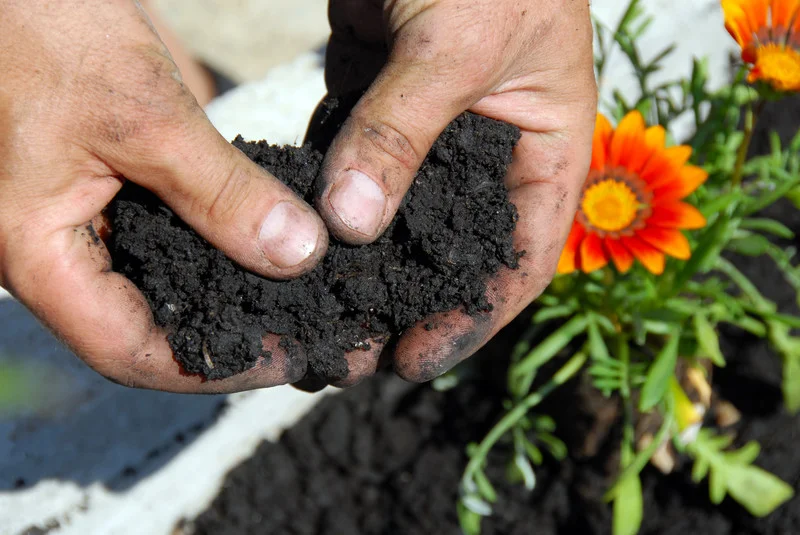
The Soil Food Web: Taking Organic Gardening to the Next Level
Organic gardeners are faced with a unique challenge; by putting health and environment first, we set ourselves up for a neverending struggle against pests, disease, and lackluster growth. In the absence of chemicals, the organic grower has to get creative and work twice as hard to achieve the desired results.
This, at any rate, is the popular narrative, one that undoubtedly prevents many hobbyists from going the organic route. Sure, we'd all love to do the environmentally friendly thing, but we also want a flourishing garden without too many hassles, and we're conditioned to believe this is only possible through chemical applications. But what many people don't realize is that by relying on chemical fertilizers and pesticides, they actually create more work, rather than less, for themselves.
Most gardeners have probably heard that synthetic chemicals destroy beneficial organisms in the soil, but for many this concept is too abstract to grasp. Who are these organisms anyway? What are they up to? How can I know they're helping if I can't even see them? In their book Teaming With Microbes, Jeff Lowenfels and Wayne Lewis demystify the world of the soil food web, identifying key players and their roles and offering detailed advice on how to protect and manage this ecosystem for maximum results.
Lowenfels and Lewis make the compelling argument that many of problems plaguing our lawns and gardens are the direct result of the home horticulturalist's reliance on chemical products which destroy microbial life. The result is a garden that depends on application after application of fertilizer and pesticides in order to survive. Conversely, a healthy soil ecosystem controls pathogen populations, provide plants with essential nutrients, and form relationships that encourage vigorous growth and healthy immune systems.

Sexually Transmitted Allergic Reaction: Not Your Typical Allergy
It’s a story so strange that at first read it sounds like it could be an urban legend rather than a development in sexual health and allergy research. Several years ago, a 20 year old woman from the United Kingdom with a severe allergy to Brazil nuts reportedly had an allergic reaction after having sex with her partner who had consumed the nut just hours before their encounter. This was the first documented case of a woman having a sexually transmitted allergic reaction. In a world where more and more people are suffering from dangerous allergies, is this something the rest of us need to be concerned about?
You’re probably thinking, “there is no way the Brazil nut was transmitted through her partner’s semen, there had to have been some remains in his mouth, skin, or hair.” Fair enough, but the couple reports having taken every possible precaution before having sex. The man, having known that his partner was allergic, showered, washed his face, skin, teeth, and thoroughly rinsed his mouth before engaging in sex. The scientists who later studied the case stated that if the reaction were in fact from residue in his saliva or skin, she would have had the allergic reaction much faster than she did. She only started showing symptoms after they finished having sex.

E-Cigarettes: Are They Really as Safe as They Seem?
The e-cigarette business is booming, and the tobaccoless nicotine product that is considered a safe alternative to conventional smoking is set to take the world by storm – in fact, that storm has already started. Global sales in tobaccoless smoking products has grown to nearly $3 billion and around one in five smokers have tried e-cigarettes in an attempt to quit smoking[1]. So just what is it about these little devices that is so popular, and are they really as safe as they seem?

Solar Panels Demystified
Solar panels, as we know them have been around since the 1950s, when the first silicon photovoltaic cell was developed in the US. They are now a common sight on the rooves of houses, some transport vehicles, calculators, and speed cameras. There is even a government-backed scheme offering large cash incentives to convert your home to solar power. But how to they work?

Looking good and still doing it all! How does she do it?
How does she do it? We are talking about that skinny little soccer mom who balances work, three kids, soccer practice, and STILL manages to maintain a rocking body. Many Americans struggle with or have struggled with their body images. For many, the age-old excuse has been: "I just don't have time." In reality, most people cannot afford a personal trainer or Weight Watchers. They do not have time to spend an hour at the gym five days a week. The excellent news is that they do not have to! In fact, there are many lifestyle changes that can be made to help you shed pounds and stay healthy. The exciting news is: They do not require too much time out of your day.

Why You Should Anti the Anti-Vaxx Movement
There is a fair chance that you’ve heard the rumours that vaccinations are bad. In fact, around 69% of Americans have heard the theory that the government and doctors alike continue to push vaccinations on us, even though they know that vaccines cause autism and other diseases. What’s scarier is that around 20% of Americans actually believe it[1] – and the so-called ‘Anti-Vaxx’ group want to increase that number five-fold. The question is though, are they right?
Scientific Evidence…
With such a vehemence of belief and a surprisingly large following, surely the anti-vaxx group base their campaign on strong scientific evidence. Well, that’s partly true. The group, endorsed by celebrities such as model and comedian Jenny McCarthy, fashion designer Kristin Cavallari, and radio host and attorney Robert F. Kennedy Jr., argue their case based on one study published in the scientific Lancet journal in 1998. The paper, authored by Andrew Wakefield, demonstrated that rates of autism were significantly higher in those who had been vaccinated with the MMR jab – the ‘all in on’ mumps, measles, and rubella vaccine.

Sleep Deprivation and Depression
Depression is one of the most common ailments of our time. The CDC estimates that just under 10% of the US population is depressed at any one time; so many people are afflicted with depression, in fact, that it is the leading cause of disability in the country. With such a widespread and varied group of patients, methods of treatment vary widely as well. Medication and therapy, while certainly the best-known treatments, are far from the only ways we have to combat mental illness. Recent research suggests that depression can also be tackled by instead treating patients’ insomnia.
Depression often accompanies other mental and physical maladies. One of its more common attendants is sleep disorders: as many as 60% of adults with depression also suffer from symptoms of insomnia, and a 2011 study established that there was a link between the two disorders rather than it being a matter of shared symptoms. As insomnia places stress on the mind and body much like depression does, this can make life even more difficult for depressed patients already struggling to overcome a daunting obstacle to their ability to function.

Quick Weight Loss and Your Health
High-protein weight loss programs like the Dukan, Atkins, and South Beach Diets are growing in popularity. They challenge traditional medical guidelines, which suggest that overweight individuals should consume small portions of only low-fat foods in order to lose weight. Instead, diets such as the Atkins suggest that eating an unlimited quantity of high-protein, low-carb foods can leave people feeling fuller for longer and achieve superior results.
While a high-protein nutritional balance is proven to be effective for weight loss, many nutritionists, dieticians, and doctors worry that it could have a harmful impact on health. So what are the possible risks?

Food Deserts
Have you ever dreamed of lying around on a desert island, soaking up the sun? Well today, around 23.5 million Americans live in the desert[1]. That’s not the idyllic white sands and cocktails type of desert though – in fact, it’s much more sinister than that. They live in food deserts.
Desert Island Dreams
Food Deserts in America are full of dreams of only one thing – easy access to healthy, affordable foods. To qualify as a food desert, then, a geographical location will offer little or no affordable, healthy food options within a reasonable travelling distance[2]. There are more of these areas than you would think. In fact, the U.S Department of Agriculture (USDA) estimates that nearly 24 million people in America today live more than one mile away from a supermarket and have limited or no means of transport. What’s scarier is that 2.3 million Americans are living in low-income, rural communities that are ten or more miles away from retail outlets selling a good range of healthful foods[3]. That’s an awfully long way to go for fruits and vegetables, especially when you don’t own a vehicle and public transportation is poor.

One-a-Day...Not so much
Vitamins and other supplements should help your health, not harm it —in fact; the whole idea behind the campaign to “take your vitamins” is to provide your body with essential nutrients it might not be getting through your diet.
However, there are some vitamins and minerals that may have adverse effects on your health if you take them in the form of supplements, these effects can range from transient and unpleasant symptoms, to severe and life-threatening diseases; in the worst cases, certain vitamins may raise your risk of cancer.