

JOURNAL

The marginalization of the transgender community
The LGBTQ community is often seen as a monolithic entity, with everyone working towards the same end goal. It’s certainly easy to think that way, since they’re united as a community by the marginalization they experience for their sexuality and gender expression. But that acronym itself shows the inaccuracy of that assumption. This community includes gay men and lesbians, who are linked by their homosexuality but often experience different, gender-specific forms of homophobia – for instance, while a gay man might be greeted with simple disgust and even violence by a straight man, a lesbian might instead be told that her homosexuality is “sexy” by the same man and find that he is sexually aggressive towards her despite her orientation or even because of it. Bisexuals often face marginalization in the LGBTQ community because their homosexual peers resent their option to “pass” for straight, or find that potential partners outright reject them for fear of not being able to fully satisfy them. The “queer” label that rounds out the acronym is itself an umbrella term for several other disparate groups who face similar problems in how they are treated by their society for their sexuality and gender identity; often “queer” is used as shorthand for these groups or even for the entire LGBTQ community, due to how many terms would need to be rattled off to mention all of them.

Does Being Vegetarian Actually Save Any Animals?
There are lots of reasons that people become vegetarians or vegans – health, sustainability, up-bringing, but by far the most common explanation given is a moral one, that the unnecessary suffering and killing of billions of animals per year is unethical. It’s not a surprisingly conclusion, given the massive amount of animals slaughtered for food alone in the US. In 2013, 8.1 billion animals died to feed Americans, and meat eaters will consume an average of 2,088 animals in their life-time[1]. Surely then, it stands to reason that abstaining from eating meat will save the lives and prevent the suffering of animals. Whether this is true or not, however, is under some debate – and if it is true, just how many animals does vegetarianism actually save?
Calculating Saved Lives
There have been numerous studies and calculations discussing just how many animals are saved each year by a vegetarian diet – and the numbers vary wildly, from as little as 50 to as large as hundreds. Noam Mohr, of the animal charity PETA, suggests that the average meat-eater in the US consumes 26.5 animals per year and that is made up of of a cow, of a pig, of a turkey, and 25 chickens (which includes 1 allowance for eggs)[2]. On the other end of the scale, some argue that the average meat-eater consumes 406 animals per year, made up of 30 land animals, 225 fish, and 151 shellfish[3]. It is then assumed that a vegetarian, by abstaining from meat, saves the same amount of animals that a meat-eater kills.

The Childfree Life
Do we have an obligation to reproduce or is it okay to not want kids?
The choice to live your life childfree is still surprisingly taboo, even given the modern propensity for contraception and increasing reproductive freedom. It’s got to be said, there is a clear distinction between being childless and childfree. Whilst the former would like to have children but cannot, be it due to infertility or illness or whatever, this issue is one that deals primarily with the latter – the childfree, those who are able but choose not to procreate. The choice to not have children often shocks people and the proclamation is, more often than not, met with insidious comments like “there must be something wrong with you,” “that’s just selfish,” “you were a child once,” and worse “you’ll change your mind when you get older/meet the right man/your biological clock starts ticking”. It’s surprising, primarily, because in an age when we pride ourselves on freedom and choice, we still ultimately put an obligation on reproduction.
The ‘unnaturalness’ of it all
As anthropologist Sarah Blaffer Hrdy points out, women are associated with the ideals of nurturing and child-rearing and so, when a woman decides that she wants to remain childfree – or worse, declares that motherhood was a mistake after the fact – they are seen as unnatural[1], as though something is wrong with them. Jessica Valenti argues that all women are separated into two distinct categories: mothers and non-mothers[2] and in this way, parenthood defines us. Not whether we are or are going to be good parents of course, just whether or not we are parents – and the idea that we will be, and that we want to be, is still seen as our ‘default setting’.

The Good News About Edible Insects
If your life depended on it, would you eat a bug?
If you're like most Westerners, this might be the only circumstance under which you could imagine voluntarily eating a bug -- stranded in dire straits, desperate for any source of nutrition you can get your hands on, doing any disgusting thing you have to in the name of survival. But elsewhere in the world, entomophagy -- the practice of eating insects -- is a part of everyday life. It's not just food-insecure communities either: the Food and Agriculture Organisation of the United Nations (FAO) estimates that roughly 2.5 billion people worldwide -- over a quarter of the population -- consume insects as a regular part of their diet. In regions of Asia, Africa, and South America, these critters range from standard street fare to sought-after delicacies. According to Julieta Ramos-Elorduy, author of the book Creepy Crawly Cuisine: The Gourmet Guide to Edible Insects, in Mexico City, “[a] pound of ants costs ten times more than a pound of meat, and the white agave worm fourteen times more. Grasshoppers, the red agave worm, and water boatman eggs all cost twice the price of beef.”
Here in the West we’ve been conditioned to regard insects – particularly in the context of food – as, well, icky. But it turns out there are several excellent reasons why we should all at least try to get over our collective hangup. Among those with an eye toward sustainability, there's a growing consensus that the cultivation of edible insects offers a vital solution to the daunting problems of feeding a growing population. With chronic malnutrition affecting some 805 million people worldwide and current livestock practices already straining the earth’s resources, bugs could very well be the key to ensuring both food security and environmental sustainability for the planet’s future.
So ask yourself: if the world depended on it, would you eat a bug?
Bugs: The Better Livestock
In 2006 the FAO published a report titled Livestock's Long Shadow in which it explored the sobering environmental consequences of modern-day agriculture. The findings cover a host of environmental problems, ranging from air and water pollution and greenhouse gas emissions to rainforest destruction and soil degradation. According to the report, livestock activities account for 18% of total global greenhouse gas (GHG) emissions – more than the transportation sector. When it comes to individual greenhouse gases, livestock rearing accounts for a full 35 - 40% of global methane emissions and up to 65% of nitrous oxide emissions – both of which gases carry significantly higher global warming potential than the oft-demonized CO2. The livestock sector currently occupies around 30% of the planet's ice-free land, and the expansion of livestock grazing is considered to be the number one driving factor behind the destruction of our rainforests.
Reducing livestock's environmental impact, then, is of critical importance to addressing the effects of global climate change. But with a global population expected to reach 9 billion by 2050, scaling back on food production simply isn't an option. In fact, the FAO predicts that agricultural production will have to as much as double to keep up with demand, effectively exceeding the planet's supply of arable land. With pollution, population growth, and nutritional needs all poised for collision, the word “unsustainable” doesn't even begin to cover the challenges ahead.

LGBT Youth Homelessness Epidemic
In the past decade, the US has seen significant progress in LGBTQ rights. The most high-profile issue, that of same-sex marriage, has also seen the greatest gains: 35 states allow same-sex marriage outright, the remaining 15 states are awaiting action in the courts on the issue, and the federal government recognizes same-sex marriages as legal.[i] In an era where DOMA and DADT have been struck down, it would be easy to think that most of the work to be done on LGBTQ rights has been accomplished. However, the unfortunate truth is that these victories, while a great step forward, only affect gay and lesbian adults. For others in the community, and especially for queer youth, there are plenty more hardships to face, and far less national attention to support them.
In particular, homelessness is a huge problem for LGBTQ youth. It is perhaps unsurprising that young people in the queer community are most vulnerable to this problem. Sadly, despite making up a small percentage of the US population, a 2012 study found that as much as 40% of homeless youth are LGBTQ.[ii] In a cruel twist of irony, the prominence of gay rights issues might even be contributing to the disproportionate number of gay youth on the streets; encouraged by seeing adults like them fighting for their civil rights, LGBTQ children are coming out far earlier than before, often well before gaining independence from their families.[iii] Since they often have little to no contact with the LGBTQ community, they have no support network to fall back on if their families should reject them, as families unfortunately often do. Consequently, the homeless population of this group is growing at a disturbing rate, and in 2012 94% of agencies reported working with LGBTQ youth, compared to 82% ten years earlier.[iv]

Diet and nutrition: Our instinctual tendencies to consume more calories than needed
It’s hard to look anywhere without finding some dismal statistic about the weight problems prevalent in our society. The 2011-2012 CDC statistics for the rate of obesity in Americans found that 35% of adults were obese; the 2009-2010 statistics found that 18% of children above 6 were obese, too.[i] It’s considered such a problem that First Lady Michelle Obama has developed a campaign to address the prevalence of childhood obesity. We are bombarded with information like this and told that we must, simply must, change for the sake of our health, yet still there’s only been modest improvement in the numbers. A 2007 study in Australia found that although people trying to change their diet usually undertook that change, only 26% of those people were sticking to it rigidly six months in.[ii] Even when faced with the life-or-death decision to change one’s diet following a heart attack or stroke, in a 2013 study only 39% of patients reported eating healthier food after such a life-shattering event.[iii] Why is it so hard to maintain healthy eating habits, even in the face of so much societal pressure and personal incentive to do so?
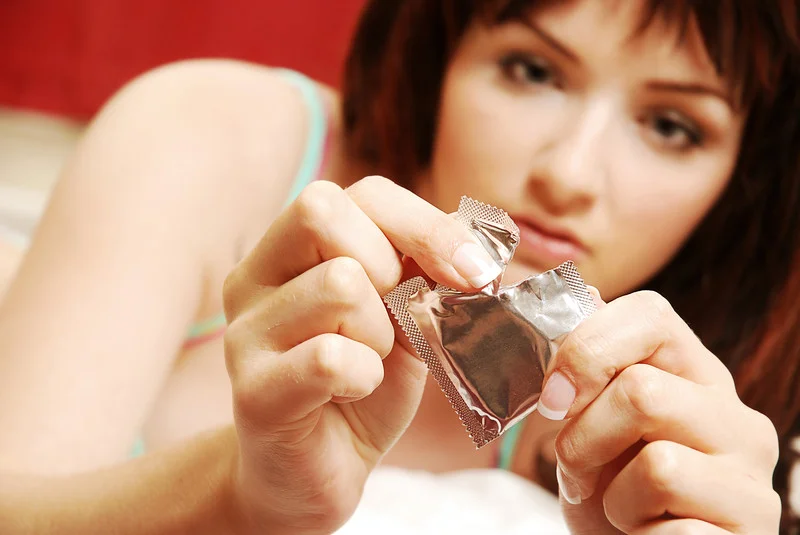
A tampon that prevents HIV
Scientists have been searching for a way to help women prevent contracting HIV during heterosexual sex for some time now. Eighty-four percent of women contract HIV in this way and at present the only preventative options are condoms (both male and female versions). This might seem simple and accessible enough to a number of women living in the United States, but the reality is that for many women around the world guaranteeing that their male partners will use a condom certainly can prove to be difficult, if not impossible. Half of the people in the world living with HIV are women and women are twice as likely as men to contract HIV. This is one of the reasons that scientists at the University of Washington in Seattle are interested in creating a new form of protection in which women can take their sexual health back into their own hands regardless of their situation.
As mentioned before, this idea is nothing new. Pre-Exposure Prophylaxis (or PreP) is a prevention method that can be used by people who have a high risk of contracting HIV. This might include people with HIV positive partners, intravenous drug users, or people who regularly have unprotected sex with partners with unknown HIV statuses. The anti-HIV drugs are given in the form of a pill that must be taken every day. Scientists have also been working on topical creams and gels that contain the anti-HIV drugs microbicides for years. While the intention is good with these products, they still lack usability and convenience. They can leak out, be quite messy, and the anti-HIV drugs take about 20 minutes to absorb into a woman’s system, so she would have to know she was going to have sex beforehand and have already applied the gel or cream in order to be properly protected. Microbicides are a promising way to help women prevent HIV, but the engineers at the University of Washington agree that the delivery method of these drugs need serious improvement.
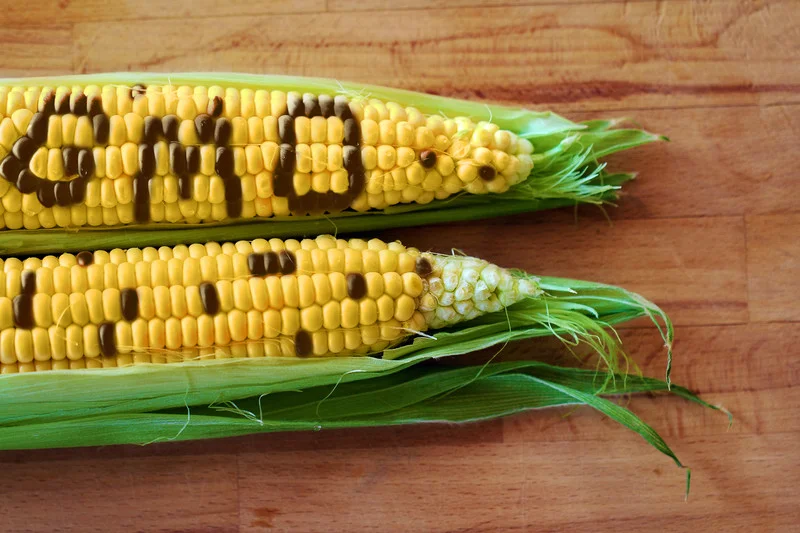
Frankenfoods: Monstrous or Misunderstood? A Look at the Understated Benefits of Genetically Modified Crops
What are GMOs?
GMOs, or genetically modified organisms, are created when a gene from one species is transferred to another, thus creating something that would not occur naturally. It means that a geneticist can isolate a gene for a specific attribute, such as resistance to drought, and implant it into a different species. The newly created plant will then develop drought resistance too. So called ‘frankenfoods’ (a rather clever play on Frankenstein’s monster) are spliced for a number of reasons: taste, texture, durability, nutrition, and many more. The genes don’t just come from other plants either, but have been sourced from bacterium and animals too – in fact, just about any organism that has a gene that may be helpful.
There has been a lot of debate around the issue of GMOs lately, especially as groups continue to lobby for legislation forcing food companies to label foods specifically as GMO. It’s easy to think that this is a topic that doesn’t affect you but actually, around 70% of all the food lining our grocery store shelves are genetically modified, and the US accounts for 63% of all GM crops worldwide[1]. So it seems that unless you eat entirely organic, the chances are that you are eating genetically modified foods – and far from being someone else’s problem, it’s actually an issue that affects us all.

The hidden cost of negative body image
Dissatisfaction with one’s appearance is a familiar feeling to many of us. In a society with idealized bodies plastered all over the media we consume, from magazines to movies and everywhere in between, drawing unfavorable comparisons of oneself to the results of Photoshop might even be inevitable. People do not fret over their looks for no reason, either: perceived attractiveness is, for example, likely to be tied to employment rate and wages earned.[i] Teenagers, too, feel the pressure of trying to measure up to modern times’ Aphrodite and Adonis – perhaps even more keenly than adults, at times. Research shows time and again that young people worry quite a lot over their looks, and sometimes those worries can put them on the path to self-destruction. And since such low self-perception and the disorders associated with it tend to be rooted in adolescence, if they do not outright begin then, it is important to be aware of how these problems crop up in young people if we hope to combat them in the population at large.

Obesity and the Importance of Beautiful Staircases
Everyone knows the importance of taking the stairs rather than the elevator, although not everyone does. There are lots of things that can impact our decision to take the stairs – our fitness levels, how high in the building we may need to go, whether we’re injured or disabled, or even simply our energy levels on any given day. But does the aesthetic appeal of a staircase ever come into question? David Burney think so.
A Celebration of Stairs
Burney, a New York City Commissioner of the Department of Design and Construction says that we should make the most of the staircases in every building, and by making them aesthetically pleasing, we can encourage more people to climb them[1]. He, perhaps rightly, points out that in trying to make life easier, architects and building planners have also made life sedentary and this, in turn, has made us lose our love of the grand staircases that are so often a focal point in old buildings. In their place, we see elevator shafts, perhaps with a small sign indicating the way to a drab staircase that is there for necessity alone.