

JOURNAL
Honoring Beverly Tayor via Community Living Campaign
Beverly Taylor was my friend. I am so fortunate to be able to know her and spend time with her during my practicum at the Community Living Campaign. Ms. Taylor was a strong leader in the San Francisco Community. I will never forget her resilience and kindness. I miss you so much, Ms. Beverly! See the video below.

What happens to all that leftover hotel soap? Fourteen years ago, one man asked that very question.
One man, a pickle bucket, and a potato peeler
The thought first struck Shawn Seipler in 2008 while staying at a hotel in Minneapolis.
Seipler was a road dog. A technology executive, he spent 150 days per year in hotels on business trips. And one night, after a few room service cocktails, he wondered what became of unused hotel room soap.
So, he called the front desk and asked.

Environmental Racism - A Wake-up Call - A take on Last Week Tonight with john Oliver
The latest Last Week Tonight episode began with John Oliver; after this initial segment, the episode moved on to its main topic: Environmental Racism.
It's a well-known fact that everyone suffers from pollution, there’s no avoiding it. However, Oliver is raising awareness of the fact that some people are more affected than others. Enter Environmental Racism, a kind of racism that we don’t often think about, but it is very much a reality that plagues countries like the US. As the British-American comedian explains, this systemic racism issue is pretty overt. In one example, 4 million tons of toxic waste were removed from a white residential area and dumped in a largely black residential area. However, these injustices are not always visible: sometimes the pollution provoked is undetectable to the naked eye, thus making it even more difficult to be fought against.
As this episode makes crystal clear, neighborhoods where minorities live are targeted over white neighborhoods. This environmental issue is far from a mere annoyance, it is actively harming people’s health, being a driving factor for diseases like asthma, heart conditions, and other ailments that can lead to death. Even within the same city, there can be startling disparities in the living conditions of different ethnic groups.
Racist zoning policies are motivated by the twisted belief that black and minority neighborhoods offer the “least resistance” to these abuses of power. This is a problem that has existed for decades, and even now there are few policies to protect people affected by these environmental hazards. Even environmental movements have left certain communities out of consideration, failing to provide the necessary support.

Is the Pandemic Really Over?
Coachella is back with an anticipated crowd size of up to 750,000 throughout the festival. And concertgoers are mask less for the most part, social distancing is not on anyone's mind and audience crowds sing their favorite songs together. It's hard to believe that only two years ago, public health officials were urging church congregations to limit singing activities to help stop the spread of COVID-19. For many, the return to Coachella is the first sign that COVID-19 restrictions are either gone or non-existent for the first time in over two years. And, as we all breathe a deep sigh of relief and enjoy each other's company, lurking in the back of many minds is a simple question. Is the pandemic really over? And who decides that it's over?

Are fruit-flavored sparkling waters bad for you? Via Kaiser Permanente
People can’t seem to get enough of sparkling water these days. In fact, it exploded into a $29 billion global industry in 2020.1 With no calories or sweeteners, bubbly drinks like LaCroix, Bubly, and Hint may seem like healthy no-brainers.2 But are these sparkling waters actually good for you?

Surprising ways you may be getting sun-damaged skin via Kaiser Permanente
Make coffee. Eat breakfast. Brush your teeth. Take a shower.
This typical morning routine is missing an important step: Put on sunscreen.
Why should you wear it every day? Because sun-damaged skin may be sneaking up on you.
You know you and your family should wear sunscreen before spending a long afternoon outdoors, but sun damage is cumulative — short periods of unprotected sun exposure add up over time, eventually leading to visible damage to your skin and a higher risk of skin cancer.

A Message from Okologie's CEO on Anti-Asian Racism
Okologie is steadfast in its commitment against racism and discrimination in all its forms, and we will continue to firmly speak out and strongly condemn intolerance, discrimination, and violence. We stand firmly against all racially and ethnically motivated acts of intimidation and violence. Sadly, over the past year, we have witnessed an increase in hate speech and violence. This includes attacks against members of the Asian community largely fueled by COVID-19 pandemic rhetoric and xenophobia.

Contributing factors for low COVID-19 vaccination rates in vulnerable populations
As we celebrate the one-year milestone of the COVID-19 crisis, a gift to all of us has been developing and implementing the COVID-19 vaccine from manufacturers Pfizer, Moderna, and Johnson and Johnson. While a segment of Americans throughout the country are scheduling appointments and rolling up their sleeves, vaccine hesitancy prevents a portion of the population from receiving their vaccines.
The American Journal of Preventive medicine defines vaccines hesitancy as concerns about the decision to vaccinate oneself or one's children due to a broad range of contributing factors such as their compulsory nature, their coincidental temporal relationship to adverse health outcomes, and a lack of trust in the corporation and public health (Daniel Salmon, 2015). Vaccine hesitancy was a concern for public health experts even before the COVID-19 pandemic, as it primarily impacted the influenza vaccination rates in elderly and minority populations. A report from the AARP Public Policy Institute shared that nearly half of adults aged 50 and older are vaccine-hesitant. Another 11 percent of this population never get vaccines, and that the relationship with previous vaccination behaviors is an indicator of what people can expect with the COVID-19 pandemic. The CDC's 2019 Behavioral Risk Factor Surveillance System showed that 53 percent of adults ages 50 and older received a flu shot in the previous year. Still, there were notable differences in the population. For example, Black (47 percent) and Hispanic (43 percent) older adults receive flu vaccines at rates below their White (55 percent) counterparts (McSpadden, 2021).

Helpful links to potential income sources and benefits available to people during this difficult time
Next month, Californians will reach the one-year mark since the initial COVID-19 pandemic lockdown. As we all endure the remaining weeks and months ahead to stop the spread and reduce deaths until we are all vaccinated, many individuals continue to suffer both emotionally and economically. For many individuals, financial stress may be new, and the pandemic's length has made even financially stable families insecure due to the complexities involved with a quarantined society. If you are unsure if you qualify for benefits, there is a brief questionnaire to consider your available options. Additionally, we have provided an updated list of resources available to help people during this difficult time.
A Helpful Guideline for the Covid-19 Vaccine Distribution Process
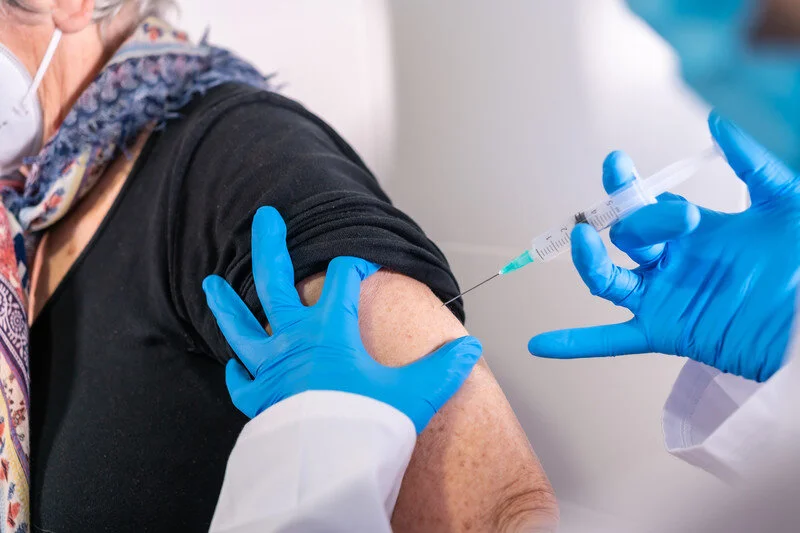
In December, the Advisory Committee on Immunization Practices for the Centers for Disease Control provided a vaccination implementation strategy that will roll out in phases or TIERs throughout the nation. The CDC recommends that in phase one, distribution is prioritized for healthcare personnel, long-term care facility residents, individuals with an underlying medical condition, including autoimmune conditions, and 70 or older individuals. These recommendations will proactively decrease the number of COVID-19 related deaths, preserve society's functioning, and reduce the extra burden COVID-19 is having on individuals already facing disparities. However, these are recommendations only and each state has its vaccination implementation strategy (Centers for Disease Control and Prevention, 2020).